
Every Christmas, My Mom Helped A Homeless Man At The Laundromat—This Year, One Look At Him Changed Everything

The garlic didn’t just smell; it sang. It was a sharp, savory aria that bounced off the peeling yellow wallpaper of our kitchenette and settled into the curtains, promising that for at least one night of the year, everything was going to be alright.
Every year, people post photos of Christmas traditions like they’re part of some perfect catalog. The matching flannel pajamas, the towering Douglas firs dripping with heirloom ornaments, the smiles that look like they were ordered online with free two-day shipping.

But ours? Ours didn’t look anything like that.
Our tradition was born in a two-bedroom walk-up in Ohio, where the radiator clanked like a dying engine and the wind rattled the single-pane windows. But inside, it was a fortress.
Every Christmas Eve, my mom, Sarah, cooked a special dinner. It wasn’t just food; it was alchemy. She took ingredients bought with coupons and discounted stickers and turned them into a feast fit for royalty.
“It’s not Christmas until the garlic hits the pan, Abby,” she’d always say, winking at me as she tied her apron tight—the one with the faded sunflowers. “And it’s not a feast until you’ve made enough to feed an army, even if it’s just us two.”
Honey-glazed ham, if she could afford it, the edges caramelized to a perfect dark candy apple red. Mashed potatoes drowned in butter and heavy cream. Green beans with bacon grease saved in a coffee can by the stove. Cornbread that was sweet and crumbly, the kind that made your mouth water just looking at it.
But the most important plate wasn’t for me. It wasn’t for her. It wasn’t for Aunt Linda who sometimes stopped by to complain about her ex-husband.
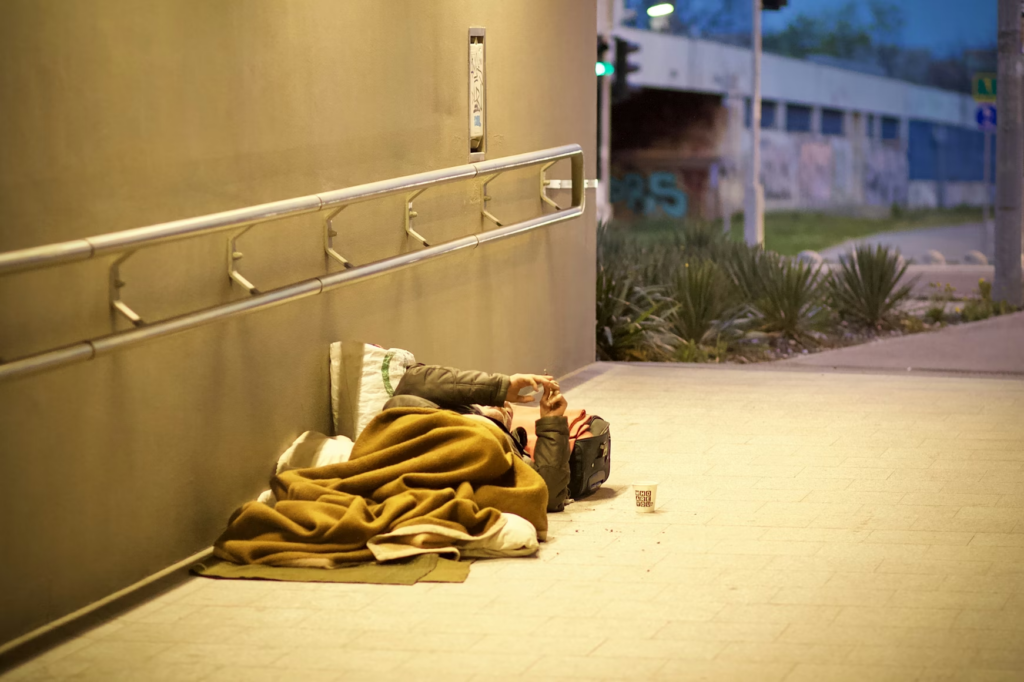
The most important plate was the one she wrapped up in heavy-duty aluminum foil, stacking it high with a little bit of everything—heavy on the meat, double scoop of potatoes—and handed to someone we didn’t even know.
I was eight the first time I noticed the ritual. The air was thick with steam and Motown Christmas records playing on the turntable. I watched her pack the food with a precision that felt religious.
“That one’s not for us,” she said, wrapping it carefully like it was something sacred, sealing the edges so the heat wouldn’t dare escape. “We have plenty. Someone else doesn’t.”
I watched her drop it into a plastic grocery bag, nestling plastic cutlery and a stack of napkins beside it. She tied the handles in a double knot.
“Who is it for, Mom?” I asked again when I was 14, leaning against the counter, full of teenage cynicism and trying to act like I didn’t care.
Mom pulled on her coat, the wool scratching against her neck, and handed me mine. Her face was flushed from the oven heat, her eyes bright.
“It’s for someone who needs it, baby,” she said, her voice dropping a register, becoming serious. “Someone the world forgot to invite to the party. And as long as I have a stove and two hands, nobody goes hungry on my watch.”
I didn’t know then that the man we gave that plate to would come back years later and bring something I didn’t even know I was missing. I didn’t know that this simple act of charity was actually a lifeline that tethered my mother to the world, and eventually, would tether me to sanity.
We lived in a small town where the industry had dried up in the eighties, leaving behind rusted factories and people with long memories and short tempers. It was the kind of town where everyone knows your business unless you’re invisible. And if you were homeless, you were invisible.
There was an old laundromat at the end of our street called “Suds & Duds.” It was a sad, fluorescent-lit box open 24 hours. It smelled of warm detergent, wet wool, and lonely nights. The windows were always steamed up, hiding the world inside.
That’s where he stayed… Eli.
He looked barely older than my cousin, maybe late 20s when we first started seeing him. His face was weathered, etched with lines that spoke of hard winters and harder luck. He had the kind of beard that grows out of necessity, not style.
He wore the same tattered gray hoodie every year. It was stained with oil and dirt, the cuffs frayed into strings. He carried everything he owned in one heavy duty garbage bag and a torn backpack that looked like it had survived a war. And he always slept curled up in the corner near the vending machine, trying to absorb the warmth from its motor, his head resting on his pack like a pillow.
But the thing I remember most wasn’t his clothes or how thin he looked. It wasn’t the dirt under his fingernails or the way he flinched when the door opened too loudly.
It was his eyes.
They were a startling, clear hazel. And they were careful. He looked at the world like it was a dog that had bitten him too many times, and he was just waiting for the next snap of its jaws.
He never asked for anything. He never held a cardboard sign. He never panhandled by the gas station. He never even looked up when we walked in, the bell above the door announcing our arrival like a town crier.
But Mom? She didn’t see a homeless man. She saw a neighbor without a roof.
She walked straight to him every year. She didn’t hover. She didn’t act like a savior descending from on high.
She knelt down beside him, ignoring the grime on the linoleum floor. She got level. Eye to eye. Human to human. Then, gently, she slid the bag over the floor.
“Hey,” she’d say, her voice soft but steady, cutting through the hum of the dryers and the clinking of zippers in the wash. “I brought you dinner. It’s hot. Be careful opening it.”
He’d sit up slowly, blinking against the harsh overhead lights, like he wasn’t sure if he was hallucinating. He’d look at the bag, then at her, then at me standing awkwardly by the folding table.
“Thank you, Ma’am… you don’t have to do this,” he would raspy, his voice unused.
And my mom, with that same soft smile that could melt a glacier, always replied, “I know I don’t have to. But I want to. Merry Christmas, Eli.”
I didn’t understand it back then. I was a teenager who thought kindness had to come with a transaction. I thought people only did things to get something in return—praise, a tax write-off, a good feeling.
One evening, I whispered as we walked back to the car, the snow crunching under our boots, the cold biting at my nose.
“Mom, what if he’s dangerous? What if he has a knife? You get so close to him.”
She didn’t even flinch. Just stared straight ahead, gripping the steering wheel with her gloved hands, waiting for the defroster to kick in.
“Dangerous is a hungry person the world forgot, Abby,” she said, her voice stern. “Dangerous is looking away when you can help. Dangerous is thinking you’re better than him just because you have a set of keys in your pocket. That man says ‘thank you’ like it’s a prayer. Fear makes monsters where there are none.”
She looked at me then, her eyes softening. “We are one bad month away from being him, Abby. Never forget that. The line between us and the corner is thinner than you think.”
Over the years, little bits of Eli’s life came out. Like puzzle pieces dropped one by one in the snow. Never all at once. It took time. It took consistency.
He never offered his story willingly, but my mom never stopped showing up either. That consistency built trust. It built a bridge over the chasm of his shame.
One Christmas, when I was 16, he was sitting upright instead of asleep, looking like he hadn’t closed his eyes in days. His face was gaunt, his eyes rimmed with red, his hands shaking slightly.
Mom handed him the bag, but she didn’t let go immediately. “You okay, Eli? You look like you’re carrying the weight of the world tonight.”
He didn’t answer right away. He stared at the foil-wrapped plate, the heat radiating into his cold hands. Then, almost like it slipped out before he could stop it, he said, “I used to have a little sister. She loved cornbread. She’d fight me for the corner piece.”

Something in his voice made my stomach twist. It was raw, open grief, the kind that never really heals, just scabs over.
“She was the only family I had,” Eli revealed, his voice cracking, staring at a spinning dryer. “We aged out of foster care together. We were supposed to look out for each other. We had a plan. We were going to get an apartment.”
He stopped, taking a jagged breath. “Then a car crash took her. Drunk driver. She was 19. I fell apart after that. Just… stopped trying.”
He didn’t say much else. He didn’t need to. The silence filled in the gaps of his heartbreak. The spiral. The grief that makes you stop paying rent, stop showing up to work, stop caring if you wake up in the morning.
My mom didn’t pry. She didn’t offer empty platitudes like “it happens for a reason” or “she’s in a better place.” She just nodded like she understood the kind of pain that can break a person’s foundation. She reached out and squeezed his shoulder, a firm, grounding pressure.
“I’m so sorry, Eli,” she whispered. “That is a heavy thing to carry alone.”
That year, she brought him gloves along with the dinner. Heavy wool ones. And a pair of thick thermal socks. “Keep your feet dry,” she told him. “It keeps the cold out of your heart.”
The next year? A grocery gift card tucked inside a Christmas card. “It came in the mail,” she lied smoothly, “someone sent us two by mistake. I hate waste, you know that.” But I knew she bought it herself, skipping her morning latte for a month to afford it.
Once, she even offered him help in finding a room at the shelter downtown.
Eli flinched like she’d offered to chain him to something. He pulled his backpack closer to his chest, his eyes darting to the door. “I can’t,” he politely protested, panic edging his voice. “Not there. It’s… it’s too loud. Too many people. I can’t do the crowds.”
“Why not?” Mom pressed gently.
He looked at me, then back down at his shoes. “Because I’d rather freeze than be locked in again. And I’d rather freeze than owe anyone anything I can’t pay back.”
I don’t know if it was pride or fear or trauma from the foster system. But my mom didn’t push. She respected his ‘no.’ She respected his agency.
She just nodded. “Okay. I understand. But dinner still stands. Always. No strings attached.”
I moved out after high school. Got a scholarship to a state college, got a degree in marketing, got a job in the city. I started a life that looked fine from the outside. I wore blazers. I drank expensive coffee. I called home on Sundays, visited on holidays.
Then cancer came for my mother. It didn’t knock; it kicked the door down and set the house on fire.
It was subtle at first. Fatigue she blamed on age. Weight loss she blamed on a new diet she read about in a magazine. A laugh that sounded thinner, less robust.
“Probably just my thyroid acting up, dear,” she’d say over the phone, dismissing my worry when I pointed out how loose her clothes were hanging. “Don’t you fuss. You focus on that promotion.”
It wasn’t her thyroid. It was stage four pancreatic cancer. By the time they found it, it had already spread like a vine choking a garden.
She was gone in under a year.
We didn’t get one last Christmas. We didn’t get the movie moment where everyone gathers around the tree and says meaningful goodbyes while snow falls gently outside.
We got a blurry fall full of doctors, antiseptic smells, beeping machines, and silence. I watched the strongest person I knew disappear in pieces. I watched the hands that used to knead dough and tie shoelaces become thin and trembling.
In October, two weeks before she died, she woke up in her hospital bed. She was lucid, the morphine haze lifting for a moment.
“Abby,” she whispered. Her voice was like dry leaves.
“I’m here, Mom,” I said, holding her hand.
“Christmas,” she said. “You have to promise me.”
“Anything, Mom.”
“The dinner. For Eli. Don’t let him think he’s forgotten. Not this year. He counts on it.”
I felt tears sting my eyes. She was dying, and she was worried about the man at the laundromat.
“I promise,” I choked out. “I’ll do it. Exactly like you did.”
She squeezed my hand, surprisingly strong. “Good. Kindness is a muscle, Abby. If you don’t use it, it atrophies. Don’t let yours wither.”
She died on a Tuesday morning. The world kept turning, which felt like an insult.
By December, I was surviving. Sort of.
I was showering, paying the rent, and just functioning on autopilot. But I was angry. I was furious. I was angry at the festive lights strung up on the lamp posts. I was angry at the carols playing in the grocery store. I was angry at everyone who still had their mom to call, and at myself for not being able to save mine.
Grief is a heavy coat that you can’t take off, no matter how hot the room gets.
On Christmas Eve, I stood in Mom’s kitchen. I hadn’t sold the apartment yet; I couldn’t bring myself to pack her things. I stared at her old roasting pan. The enamel was chipped on the handle.
I almost didn’t cook. I almost ordered pizza, drank a bottle of wine, and passed out on the couch until January.
But her voice was there, steady and stubborn in my ear, echoing off the tile: “It’s for someone who needs it, Abby. The world doesn’t stop needing kindness just because we’re sad.”
So I wiped my eyes, put on her apron—which smelled faintly of her perfume and flour—and I started to cook.
I made what I could. It wasn’t the feast she used to make, but it was warm. Baked chicken instead of ham. Instant mashed potatoes instead of real ones because I didn’t have the energy to peel five pounds of spuds. Canned green beans. Boxed cornbread mix.
It wasn’t perfect, but it was made with the last bit of energy I had.
I packed it the way she always did. Heavy foil. Double knotted bag. Plastic fork and knife. Napkins.
I drove to the laundromat, gripping the steering wheel like it was the only thing holding me together. The snow was falling lightly, dusting the windshield, turning the ugly town into something soft and quiet.
I parked in the same spot she always did. I looked at the building. The flickering “OPEN” sign. The buzzing neon. The windows steamed up against the cold.
I took a deep breath. Do it for her.
I walked in. The bell jingled. The soapy smell hit me, instantly transporting me back to being eight years old.
But what I saw inside wasn’t the same at all.
He was there… Eli.
But not like I remembered.
No hoodie. No blanket. No plastic bag full of sorrow. No dirt on his face.
He stood near the folding tables. He wore a dark suit. It wasn’t expensive, but it was pressed, clean, and tailored to fit him. His hair was cut short, neat. His beard was trimmed. He stood tall, shoulders back, looking at the washing machines like he was inspecting them, not hiding behind them.
In one hand, he held a bouquet of white lilies wrapped in clear plastic.
I froze in the doorway, the grocery bag heavy in my hand. The snow melted on my coat.
He turned. Saw me. And his eyes—those sad, careful hazel eyes—softened instantly, filling with tears.
“You came,” he said. His voice was rough with emotion, deeper than I remembered, steady.
“Eli?” I whispered, stepping closer, my boots squeaking on the linoleum. “Is that… is that you?”
He nodded, a small, shy smile touching his lips. “Yeah… it’s me, Abby.”
I held up the dinner bag like an idiot. “I brought food. It’s… it’s chicken. Mom made me promise.”
He smiled, but it was shaky and sad. “She taught you well… your mother. She never missed a year. I knew she wouldn’t let a little thing like death stop her from feeding me.”
I swallowed hard, the lump in my throat growing until it felt like a stone. “Why are you dressed like… that? You look…”
“Like a person?” he finished for me, gently.
“Like you’re going to church,” I said.
Eli looked down at the lilies in his hand. The white petals were stark against his dark jacket.
“They’re for your mom,” he said softly. “I was hoping you’d come. I was waiting for you.”
My heart raced. “She’s gone, Eli. She passed in October. It was fast.”
“I know,” he said. “I know she is.”
My heart thudded so loudly I could barely hear him say the next part.
“How did you know?” I asked. “We didn’t put it in the paper… only online.”
“I tried to find you after the funeral, Abby,” he said. “I checked the obituaries every day after she stopped coming by in the summer. I knew she was sick. She didn’t tell me, but I knew. She lost weight. She walked slower. I stood at the back of the church during the service. I stood in the shadows. I didn’t want to intrude. I wasn’t ready then. I didn’t look like this yet.”
I stepped back, confused. “What are you talking about? What do you mean you weren’t ready?”
“I needed you to know something,” he said, gesturing to the chairs. “Something your mom asked me not to tell you until I could prove I wasn’t just a guy in a corner anymore. Until I could stand in front of you as an equal.”
We sat down on the hard plastic chairs near the dryers. The air smelled of fresh laundry and old floors. The hum of the machines felt like a heartbeat.
Eli placed the lilies beside him like they were breakable. He clasped his hands together, looking at his knuckles.
Then quietly, he said, “Do you remember getting lost at the county fair when you were little? You must have been six or seven. Before I started sleeping here.”
A chill crawled up my spine.
I nodded slowly. “I… yes. I thought I’d imagined that. It’s such a blurry memory. I remember the lights and the noise.”
“You didn’t imagine it,” he paused, looking at me intently. “You ran up to me crying. I was just walking by the rides, looking for bottles to return for deposit money. I was at my lowest then. You grabbed my leg and asked for your mommy.”
I blinked, the memory sharpening. The terror of the crowd. The towering legs of strangers. “A cop found me. He gave me a lollipop.”
“A cop took you from me,” he corrected gently. “But I found you first. I was the one who stopped you from running into the parking lot. You were heading straight for the traffic.”
He described the glitter butterfly I’d had painted on my cheek that day. He described the red sneakers with the Velcro straps I was wearing.
He was right. And it broke something open inside me.
“I didn’t want to scare you, Abby. I was dirty. People looked at me like I was trash. But I knelt down. I told you to look at the Ferris Wheel. I held your hand and walked you toward the security booth… to the cop. Your mom came running the moment she saw us.”
He swallowed hard. “She saw a homeless man holding her daughter’s hand. Most people would have screamed. Most people would have called the police on me. But she didn’t.”
He looked at me, awe in his voice. “She didn’t look at me like I were dangerous. She didn’t look at me like a drug addict. She looked at me like a person. She thanked me. She grabbed my hand—my dirty hand—and shook it. She looked me in the eye. Then she asked my name… No one had done that in years.”
My hands shook as Eli continued.
“She came back the following week. She tracked me down. She asked around town. Found me here at the laundromat. Brought me a sandwich. Didn’t act like I owed her anything. Just gave it to me and said, ‘Thank you for saving my world. My world is that little girl.’”
I wiped my face, tears streaming down, hot and fast. I had never known.
“I watched you grow up,” Eli added softly. “Not like a stalker. Just from a distance. She’d tell me things when she brought dinner. She’d show me school pictures. ‘Abby has passed her driver’s test.’ ‘She’s off to college.’ ‘She got her first real job.’ ‘She’s heartbroken over a boy named Kevin.’ I felt like I knew you. I felt… involved. It made me want to be better.”
I could barely breathe. “She talked about me? To you? All those years?”
He nodded. “Like you were the sun and the moon. She was so proud of you, Abby.”
His words hit like waves crashing on the shore. And then something even heavier landed next.
“I got help,” he said, looking down at his polished shoes. “Years ago. Your mom connected me with a counseling program. She vouched for me with a guy she knew who ran a trade school. She paid for my application fee. I learned HVAC repair. I started working nights. I started saving money. It took a long time to climb out of the hole, but I did it.”
He looked up at me with those same careful eyes, but this time they held something else: hope. Pride. Dignity.
“I promised her that if I ever made it, if I ever got back on my feet completely, I’d wear a suit to prove it. To show her I was okay. To show her that her kindness wasn’t wasted on a lost cause.”
He reached into his coat pocket and pulled out a cream-colored envelope, worn at the edges like it had been handled a hundred times.
“She told me to give you this if I ever saw you again. She gave it to me last Christmas. She said, ‘Keep this safe for me. Give it to her when she’s ready.’”
He handed it to me. My name was written on the front in her loopy cursive.
I opened it. Inside was a photo of me and Mom at the fair. Young. Happy. Holding cotton candy. And in the background, slightly blurred but visible, stood a young man in a hoodie, watching over us, making sure we were safe.
On the back, she had written: “Kindness is never wasted. Love, Mom.”
I pressed the photo to my chest, sobbing. The smell of the paper reminded me of her.
“She didn’t just feed me,” Eli added, his voice thick. “She saved me. She gave me a reason to try again. She treated me like a man when I felt like a ghost. And she did it so quietly you never even knew.”
He picked up the lilies, hands trembling.
“Can I come with you? Just to say goodbye to her? I want to tell her I made it. I want to show her the suit.”
I nodded because I couldn’t speak. I stood up and offered him my arm.
We drove to the cemetery together. The food was still warm on the passenger seat, filling the car with the smell of roasted chicken and memories.
The snow was falling harder now, covering the ground in a pristine white blanket. The cemetery was silent, peaceful.
We walked to her grave. It was a simple stone. Sarah Miller. Beloved Mother.
He placed the lilies gently on the grave, right next to the headstone. The white flowers glowed in the darkness. He stood there for a long time, the snow collecting on his shoulders, head bowed. He whispered something I didn’t catch, but I saw his shoulders shake.
Then he looked at me, tears streaming down his face, mixing with the melting snow.
“She asked me something else,” he said. “Before she got too sick to talk much. The last time I saw her in August.”
“What?” I asked, shivering in the cold.
“She asked if I’d look out for you. Not in a creepy way. Just as someone who understands what it’s like to lose everyone you love. She knew you didn’t have any other family. She was worried you’d be lonely.”
His voice broke completely.
“She said, ‘Be her guardian, Eli. Be the brother she never had. Be someone she can call when the world feels too heavy.’ And I promised her I would. I owe her my life, Abby. I intend to pay that debt.”
I couldn’t hold it together anymore. I broke down completely, right there in the cold cemetery grass. The grief I had been holding back, the anger, the loneliness—it all poured out.
Eli knelt beside me, putting a hand on my shoulder. It was warm and steady. He didn’t try to fix it. He just stayed.
“You’re not alone, Abby. I know what it’s like to be alone. I know the dark. And I won’t let that happen to you.”
We stayed there until the cold became too much. Then we went back to my place. It was small and quiet, but it was warm. We ate the chicken and potatoes together in silence, the kind of silence that felt like understanding.
We talked for hours. He told me about his business—Eli’s Heating & Cooling. He told me about his sister. I told him about Mom’s quirks, about how she burned toast every time, about her laugh.
Before he left, Eli paused in the doorway. He handed me a business card.
“I’m not asking for anything,” he said. “I just needed you to know the kind of wonderful person your mother really was. And that I’m here… if you ever need me. For anything. A flat tire, a talk, a broken furnace. Anything.”
I looked at him, and I heard Mom’s voice again in my head: “It’s for someone who needs it.”
And I realized, I was the one who needed it now. I needed family.
So, I opened the door wider.

“Don’t be alone tonight, Eli,” I said. “Stay. We can watch a movie. Mom loved ‘It’s a Wonderful Life.’ It’s tradition.”
His smile was small and grateful. “Okay. I’d like that.”
We sat on the couch. Watched the old black and white movie while the snow piled up outside.
And somewhere around midnight, as the credits rolled and George Bailey realized he wasn’t alone, I realized something too: My mom hadn’t just saved Eli all those years. By saving him, she’d saved me too. She had planted a seed years ago that was blooming right when I needed it most.
She’d taught me that love doesn’t end when someone dies. It finds a way to keep showing up… one plate, one person, and one act of kindness at a time.
A few days later, my furnace started making a rattling noise. I panicked, thinking of the cost. Then I looked at the business card on my fridge.
I called Eli. He came over in twenty minutes, wearing his work uniform. He fixed it in an hour. When I tried to pay him, he pushed the money back.
“Family discount,” he said with a wink. “100% off.”
He comes over for Sunday dinner now. Not out of charity, but because he’s my friend. My brother. We talk about Mom. We keep her memory alive.
Not blood. But family. The kind you choose. The kind that chooses you back when you’re broken.
And maybe that’s what Christmas was always supposed to be about.
If this story touched your heart, let us know in the comments on the Facebook video! Has a stranger ever changed your life? If you believe in the power of kindness, share this story with your friends and family!
About The Author
